
HOME & LIVING • NORTH CAROLINA • BUYER TIPS
The porch has pumpkins.
The fireplace is glowing.
The house smells amazing.
The trees outside are showing off, the living room feels ridiculously cozy, and somewhere between the front door and the kitchen you've already figured out where the Christmas tree is going.
We understand. 😂
Fall can make a home incredibly easy to fall in love with.
But it can also be a surprisingly useful time to pay attention to how that home actually looks, feels and functions.
If you're touring homes this fall, enjoy the pretty. Just don't let it keep you from noticing the house underneath it.
Look Up Before You Fall in Love
That beautiful tree canopy deserves a glance.
So does the roof underneath it.
You aren't trying to conduct your own roof inspection from the driveway. You're simply paying attention.
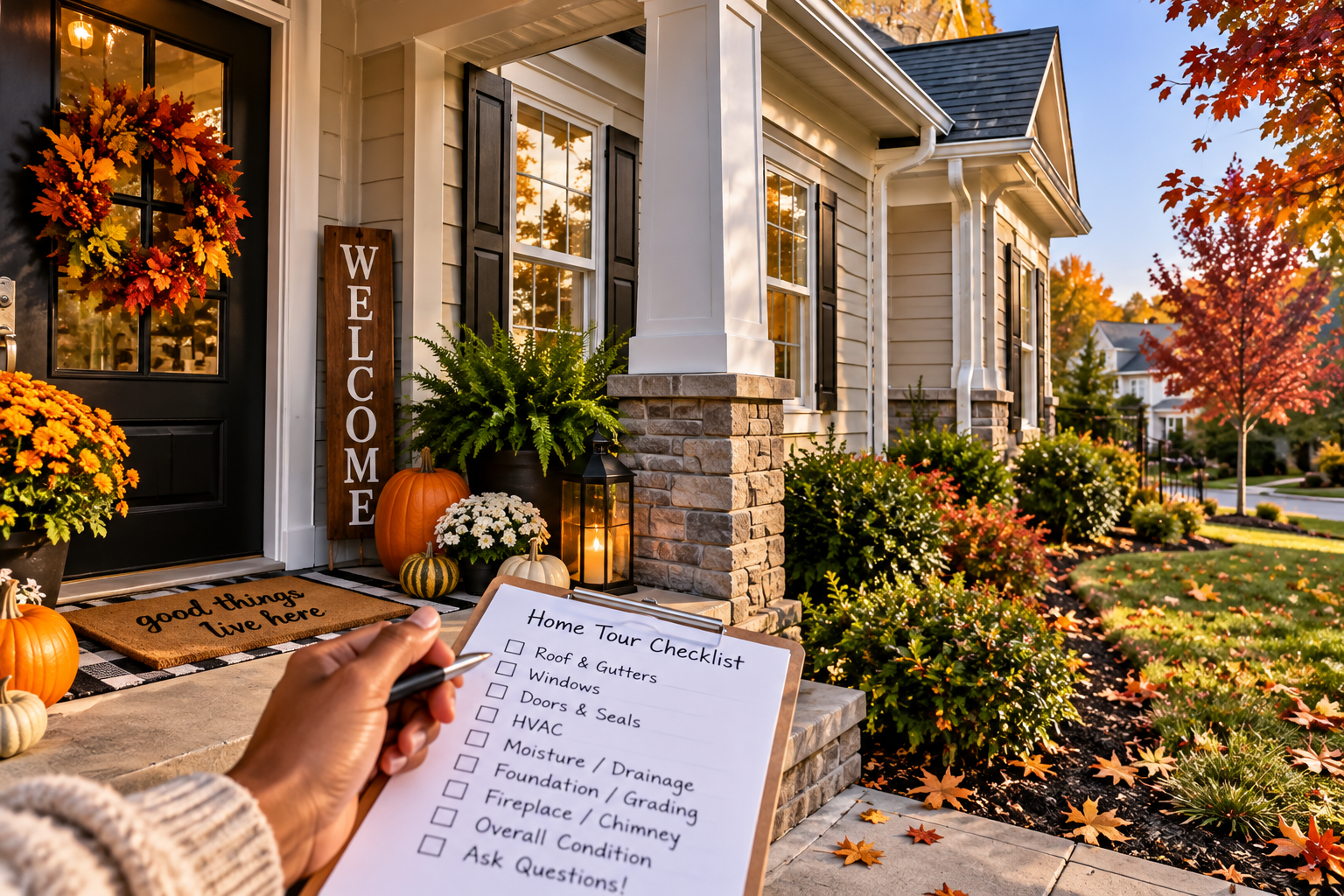
Do the gutters appear clogged or damaged? Are downspouts present and directing water somewhere sensible? Do you notice areas of the roof that look different from the rest?
Professional home inspections can include evaluation of the roof and roof-drainage systems, and the National Association of REALTORS® identifies improper drainage among the issues an inspection may uncover.
A buyer doesn't need to diagnose the problem.
You just need to know when something deserves another question.
Then Look Down
Fall leaves can make a yard gorgeous.
They can also make it easy to focus on landscaping instead of drainage.
As you walk toward the house, notice the relationship between the yard and the foundation. After recent rain, are there noticeably wet areas or places where water appears to collect?
The U.S. Environmental Protection Agency recommends maintaining gutters and having the ground slope away from a home's foundation as part of controlling unwanted moisture.
That doesn't mean a puddle automatically equals a major problem.
It means water deserves your attention.
Pay Attention to Moisture
Once you're inside, don't just look at countertops and flooring.
Notice the areas around windows. Look at ceilings and walls. If there's a basement or accessible crawl-space information available during the buying process, don't treat moisture as an afterthought.
Condensation can sometimes provide a clue, too.
The EPA notes that moisture collecting on windows, walls or pipes can indicate excessive humidity, and controlling moisture is an important part of preventing mold growth.
Again, you're not there to diagnose mold—or anything else.
You're noticing conditions that may deserve professional evaluation.
Feel the House, Too
One advantage of touring homes as temperatures cool?
Sometimes you can actually feel things that aren't nearly as obvious on a mild spring afternoon.
Does one room feel dramatically colder than another?
Do you notice a draft near a closed window or exterior door?
ENERGY STAR notes that drafts around windows and doors are common signs of air leakage and that some of the most significant air leaks in a home may actually occur in attics and basements.
A chilly spot doesn't tell you why it's chilly.
But it's perfectly reasonable to notice it.
Don't Let the Fireplace Sell You the Fireplace
We know.
It's crackling.
There are probably two beautiful chairs angled toward it.
You have already imagined hot chocolate. 😂
Enjoy the moment—and remember that fireplaces and chimneys are still components of the home.
Professional home inspections may include fireplaces, vents, flues and chimney-related components. Depending on what an inspector observes, further evaluation by an appropriate specialist may be recommended.
Cozy is wonderful.
Cozy and properly evaluated is better.
Look Past the Styling
A well-presented home is supposed to make you feel comfortable.
That's not a bad thing.
But while you're admiring the paint color, furniture and seasonal décor, occasionally ask yourself:
What belongs to the house, and what belongs to the presentation?
The beautiful sofa leaves.
The candles leave.
The fall wreath leaves.
The home's structure, systems, windows, roof, drainage and other permanent components stay.
Those are the things you'll be living with after closing.
You're Observing—Not Inspecting
This may be the most important distinction.
A showing isn't a home inspection, and buyers shouldn't feel responsible for becoming amateur inspectors.
In North Carolina, individuals performing home inspections for compensation must be licensed by the North Carolina Home Inspector Licensure Board. The North Carolina Real Estate Commission also emphasizes the importance of buyers receiving and reviewing the complete written inspection report—not merely relying on a summary.
Your job during a showing is much simpler.
Pay attention.
Ask questions.
Remember what you noticed.
Then use the appropriate professionals during your purchasing process to investigate the things that matter.
Fall Can Make a House Beautiful. It Can Also Make It Revealing.
There's nothing wrong with walking into a house and immediately loving it.
That's part of the fun.
But the best home-shopping experience combines that excitement with good information.
Notice the beautiful kitchen.
Picture Thanksgiving around the dining table.
Imagine the dog racing through the backyard.
Just remember to look at the gutters while you're out there. 😂
Because the goal isn't to talk yourself out of a home you love.
It's to understand the home you're considering buying.
Looking for a Home in North Carolina?
A beautiful showing should leave you excited—and informed.
The M Homes Group can help you navigate the home-search process, ask better questions and move from touring properties to making informed decisions.